Practitioner Reflections: How Mindbody Approaches Transformed My Practice, Client Outcomes and Job Satisfaction
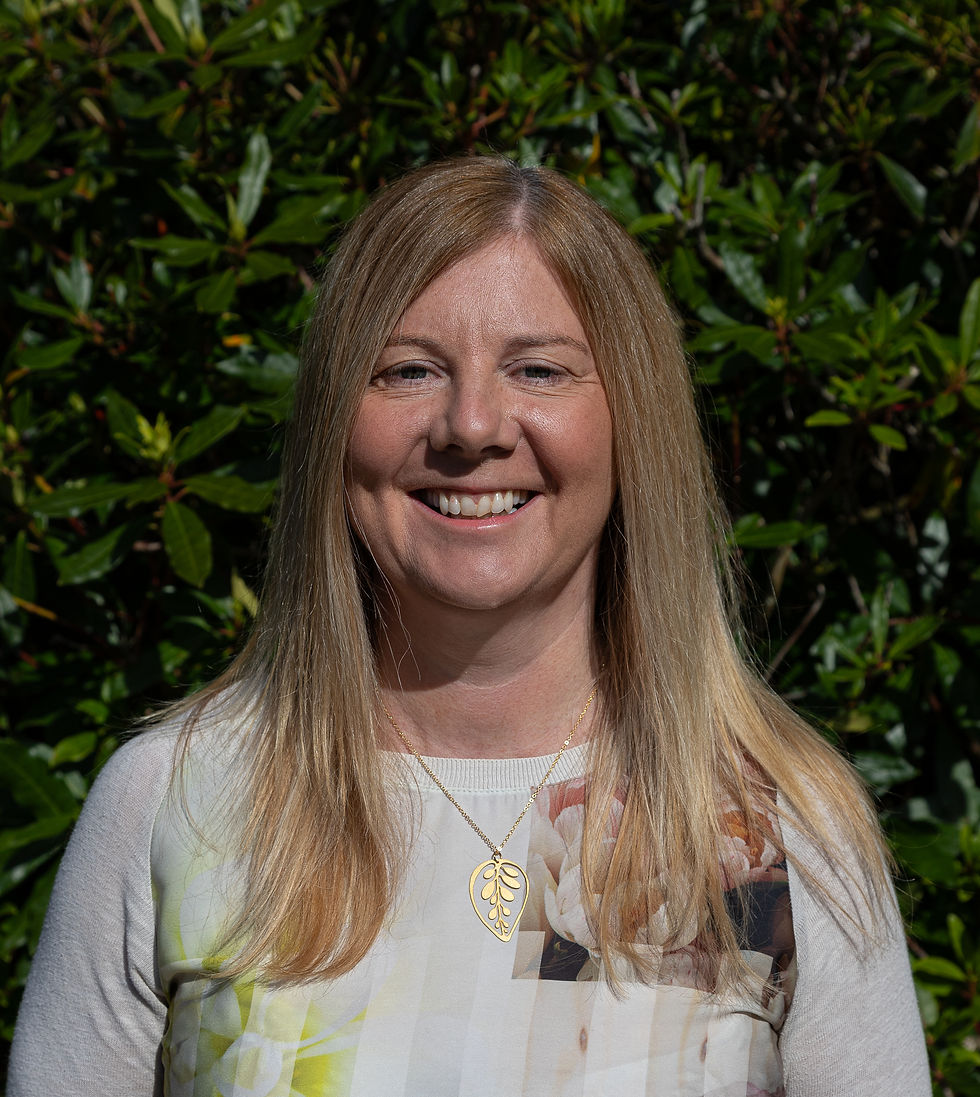
We're delighted to share a blog by Helen Stoker, who discusses her transition to manual therapy to mindbody coaching work - and the impact this has shift has had on her clients' treatment outcomes along with her own enjoyment and fulfilment within her role.
A little about me and my professional background
Hi, I’m Helen. I’m a sports therapist and mindbody practitioner supporting people with chronic pain.
I initially wanted to be a psychologist, but life took me in a different direction and I ended up studying Sports Science. In my twenties, I worked on projects with the Prince’s Trust and North Wales Probation Services, supporting young offenders. I later moved to the Lake District and retrained as a Sports Therapist and a Breathwork-certified Life Coach. I also hold a diploma in nutrition, and more recently qualified as a SIRPA (Stress Illness Recovery) practitioner. I have since completed the Pain Reprocessing Therapy coaching course, both of which have profoundly influenced and revolutionised my practice.
What sparked my interest in mindbody approaches to health?
My interest in mindbody medicine was sparked after years of coming up against what felt like “roadblocks” in clinical practice. I could not understand why, when I treated two people with the same symptoms using the same manual therapy techniques, one would fully recover while the other would still be in pain 12 months later.
As a private clinician, I often felt quite isolated and would question my ability to truly help all of my clients.
One day I had an epiphany.
A regular patient came in very upset. They lay face down on the treatment couch and began to open up emotionally. I felt humbled that they trusted me with something so personal, and it did not feel right to begin my usual trigger point therapy, which can sometimes be quite painful. So instead, I offered very gentle massage while they talked.
An hour later, I was certain they would not return. I had not done my usual work to “relieve” their pain. But they got up, dressed, thanked me, and said they had no idea what I had done—but their pain had completely gone.
I was both astounded and baffled. Deep down, I realised what had happened: I had simply provided a safe space for them to express emotions freely. Until that moment, I had never connected emotions with physical pain. It made me question much of what I had been taught, and that was the beginning of my journey into a rabbit hole of “new” science.
A fundamental shift in how I viewed chronic symptoms
It turned out that although I say “new” science, mindbody medicine has actually been around for decades, with a substantial body of research behind it, even if it has not fully reached mainstream medicine.
In one commonly cited clinical vignette in pain neuroscience education, a construction worker presented to A&E in severe distress after stepping on a nail that appeared to have penetrated his foot. He reported intense pain consistent with a significant injury and was treated for a suspected puncture wound. However, when his boot was removed, clinicians discovered that the nail had passed between his toes without causing any actual tissue damage.
This case was originally reported in a brief British Medical Journal “Minerva” column (Fisher et al., 1995) and has since been widely used in pain neuroscience education, including by Professors Lorimer Moseley and David Butler, to illustrate how pain is not a direct measure of tissue damage alone, but can also be strongly influenced by perceived threat and the brain’s interpretation of danger.
I later read John Sarno’s Healing Back Pain, which argues that many cases of chronic pain are generated or maintained by the brain in response to emotional stress. He proposes that recognising and addressing these psychological factors can reduce symptoms—a concept that has influenced modern mindbody approaches to pain, although his specific explanations (of the mechanisms by which symptoms are generated) remain scientifically debated.
Diving into the science and getting credentialled in mindbody medicine
Through my research, I realised there was not only a growing community of chronic pain sufferers, but also a whole community of support and education.
I began listening to podcasts and learning more and more. One day, I heard Dr Rangan Chatterjee interviewing Dr Howard Schubiner, one of the leading experts in neuroplastic (mindbody) pain. He mentioned SIRPA, a UK-based organisation offering training for clinicians in mindbody medicine. I signed up for Levels 1, 2, and 3 of their CPD courses and gradually worked through them.
I was fascinated by what I was learning. My case studies were a steep learning curve, but it was incredibly rewarding to see the results in practice. It was not always easy—shifting away from my original training required real effort—but, as with any meaningful change, consistency made the difference. Over time, this way of working began to feel natural.
Alongside this, I completed a Life Coaching diploma, which helped me move away from a “fixing” model and toward empowering clients to support their own recovery. I later completed the Pain Reprocessing Therapy coaching course to further refine my approach. Pain Reprocessing Therapy (PRT) is an evidence-based treatment approach that helps people with chronic primary or neuroplastic pain retrain the brain's response to pain through education, emotional awareness, and reducing fear of symptoms.
Implementing the approach with my patients
My practice now looks very different from how it once did. I no longer try to “fix” people. Instead, I aim to empower them to create long-term, sustainable change.
I also recognise that I can’t help everyone—sometimes people are not ready for this approach, and that’s okay. I try not to put too much pressure on myself or on others. This work represents a real paradigm shift, and there is no one-size-fits-all model. What works for one person may not work for another. I’m constantly learning, and I genuinely love that process.
The life-changing impact of mindbody approaches for my clients
The results of a mindbody approach can be remarkable.
One patient, who had experienced chronic pain for years, agreed to be one of my case studies. I had been working with her on and off for over five years using manual therapy for various injuries. While it helped temporarily, the pain never fully resolved. After an MRI showed hip pathology, she opted for surgery. Unfortunately, the pain persisted, so she agreed to try this approach.
Through neuroscience education, reframing pain, and gradually rebuilding trust in movement while addressing fear, her pain began to reduce. The change was so significant that after six sessions we were both in disbelief.
Another patient with persistent back pain for over 10 years described her recovery as “unbelievable” after five sessions. She had been told her back was fragile, that she should avoid lifting, that her spine was not straight, and that she should not run. She came to me feeling hopeless.
I listened to her story and reassured her that she was not fragile—the body is strong, and the mind powerful. She began to recognise her own pain–fear cycle and became more aware of her subconscious thought patterns. She started applying the techniques, and within weeks she ran her first Parkrun in years. I think it’s important to note that not all recoveries are this rapid, and in most cases the journey is not linear, but recovery from neuroplastic symptoms is possible.

A huge boost in my role satisfaction
This work brings me a deep sense of joy and professional satisfaction. It has completely transformed my approach to treatment. I have recently relocated to Portugal and now spend most of my time working with clients online.
While I still value informed touch as part of healing, I have found that with chronic pain, some of the most powerful change can happen without manual therapy. I continue to learn every day about the mind–body connection and feel grateful to be part of this growing field of evidence-based medicine.

Where can I learn more?
If you are a practitioner feeling frustrated with your current approach and curious about mindbody medicine, I’d highly recommend exploring this work.
You could start with Dr Howard Schubiner’s Unlearn Your Pain or Alan Gordon’s The Way Out For training, check out SIRPA UK for CPD courses. Living Proof also offers an introductory course for professionals: Medicine and the Mind-Brain-Body Connection.
Podcasts such as The Science Behind the Symptoms, Feel Better, Live More and The Cure for Chronic Pain with Nicole Sachs are also excellent starting points.
If you’d like more information about me and the services I offer, please take a look at my website, or follow me on Instagram @genki.therapy.