


Changing the Narrative: My Ongoing Recovery from Fibromyalgia
Updated: 6 days ago
We are delighted to share Rachel Kirkbride's healing journey on our blog. Rachel is a former UK Family Lawyer, STOTT Pilates instructor and mum of three. An extended version of Rachel's story with further insights can be read through her Changing the Narrative Blog series, which will soon be available as a podcast too. Here, she has started sharing her ongoing recovery and, through her lived-experience, explores the science, people and approaches that have shaped it, as well as ideas for wider change.
Rachel shares shorter reflections on chronic pain, movement, mindset and whole-person wellbeing on Instagram at @rachel_kirkbride.
Through her story, writing, advocacy and collaboration with experts, organisations and others with lived experience, Rachel hopes to contribute to making modern pain science more accessible and relatable, with a particular interest in public pain literacy, healthcare integration and condition-specific education.
When Pain Entered My Life
If you had told me fifteen years ago that I would one day be writing publicly about my experience with chronic pain and modern pain science, I would probably have been completely baffled!
I certainly never imagined also teaching Pilates, writing a blog series, developing a podcast or sharing my journey on social media! I assumed I would still be practising as a Family Lawyer: the career I had spent years training for and almost a decade building.
But chronic pain changed my life. And, in many ways, it has taught me more than almost anything else.
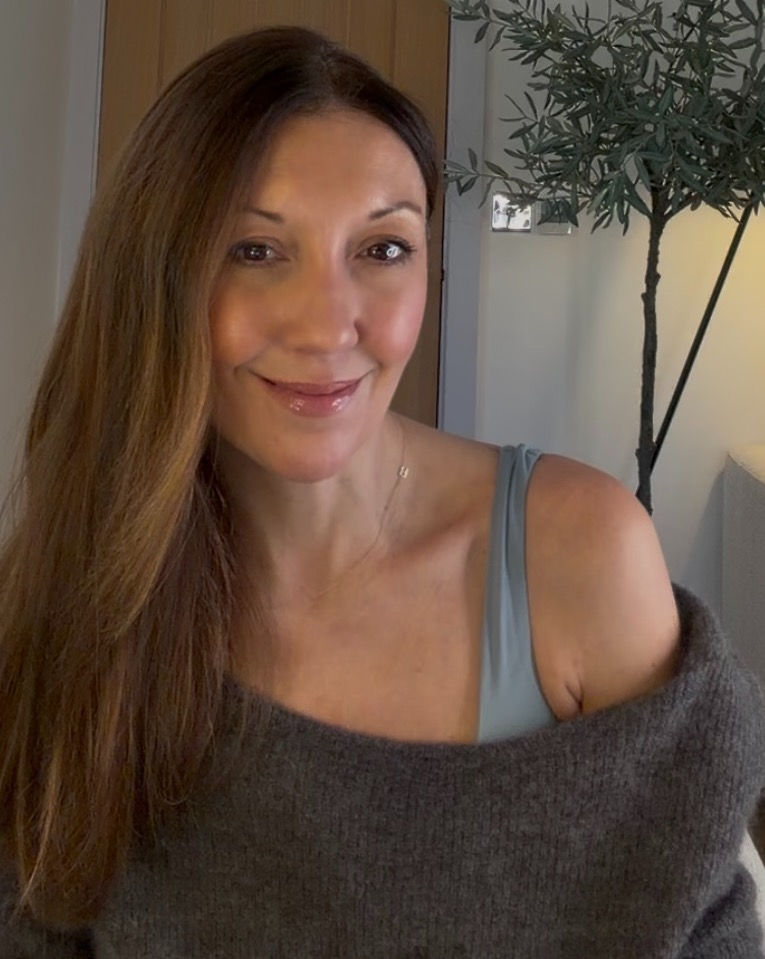
How it all began
Shortly after the birth of my third child in 2016, I began feeling pain…everywhere.
In my legs, arms, back, torso - even my hands and feet. Not just pain, but stiffness, sensory sensitivities, poor and unrefreshing sleep, brain fog and a bone-deep heaviness that made my body feel decades older than thirty-five. Imagine the day after running a marathon, combined with the skin tenderness of flu, except it never goes away.
Parenting a newborn and five-year-old twins through that was relentless.
After blood tests, scans and examinations ruled out other conditions, a rheumatologist finally brought my symptoms together under one diagnosis: fibromyalgia.
Having a name brought some relief, but not a meaningful explanation. I was told there was no cure and treatment would focus on managing the condition. I was prescribed several medications, including Tramadol, and referred to an NHS pain clinic.
Medication didn't remove the pain and stiffness, but it dulled them enough to help me function in those early days, and for that I remain grateful.
But somewhere beneath the pain and exhaustion, I couldn't accept that this medicated, foggy version of me was as good as life was going to get, so early on I came off the other medication and reduced tramadol by a third.
Searching for Answers
For years I searched for relief almost entirely within the body.
I tried physiotherapy, chiropractic treatment, acupuncture and other physically focused approaches. Some offered temporary relief, but nothing significantly changed the widespread pain, fatigue and sensitivity.
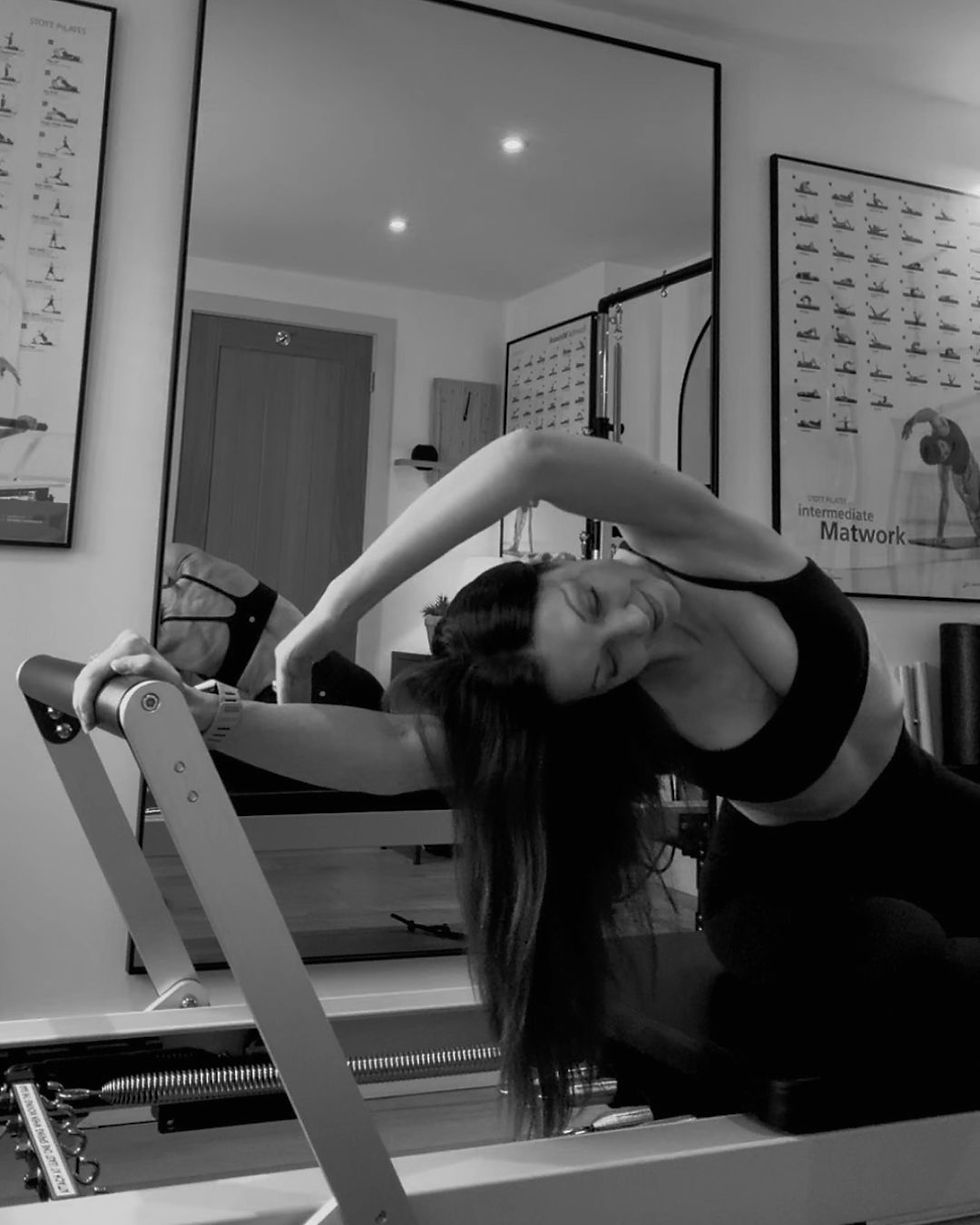
Movement did help. I discovered Reformer Pilates. It met my body where it was on any particular day, rather than where I thought it should be, helping me regain strength, mobility and trust in my body. It eventually became such an important part of my life that I trained as a STOTT Pilates instructor.
And I noticed something else.
Stress made everything worse.
During difficult periods, my pain would flare. Headaches and migraines appeared. My IBS worsened. My sleep deteriorated. It became increasingly difficult to ignore the connection between my emotional wellbeing, my nervous system and my physical symptoms.
I just didn't yet understand quite how profound that connection might be.
The Lightbulb Moment: Understanding Pain
Eventually, that curiosity led me to a pain therapist, where I was first introduced to Pain Reprocessing Therapy (PRT). From there, I discovered the work of experts such as Dr John Sarno, Dr Howard Schubiner, psychotherapists Nicole Sachs and Alan Gordon and organisations including SIRPA and, later, Living Proof. I immersed myself in books, podcasts, documentaries and research.
I'll admit, I was sceptical at first. But I've always tried to keep an open mind and generally subscribe to the view: don't knock it until you've tried it!
I'm so glad I did.
For the first time, I encountered neuroplastic pain science. What I began to understand was surprisingly much simpler than it sounds:
1. Neuroplastic pain is real
I learnt that neuroplastic pain (also referred to as nociplastic pain) - like many other persistent symptoms - is real and can be completely debilitating. But rather than necessarily reflecting ongoing damage within the body, it can be driven by how the brain and nervous system process and interpret signals.
Whether the original source is a fresh injury, infection, inflammation, structural pathology or a sensitised nervous system, pain itself is always created by the brain.
2. Pain is, first and foremost, protective
This was perhaps the most significant shift in my understanding.
Dr Schubiner and many other experts in this field describes pain as a “protector”.
When we burn a hand or break a wrist, pain encourages us to stop and protect ourselves while the body heals. It is part of an extraordinary protective system designed to keep us safe.
3. But that protective system can become overprotective
I also learnt that, rather than switching off once the original danger has passed, the brain and nervous system can continue producing pain long after tissues have healed - triggered by learned associations or anticipated and perceived danger.
The pain is still real, but the brain is responding as though we need far more protection than the present situation actually requires.
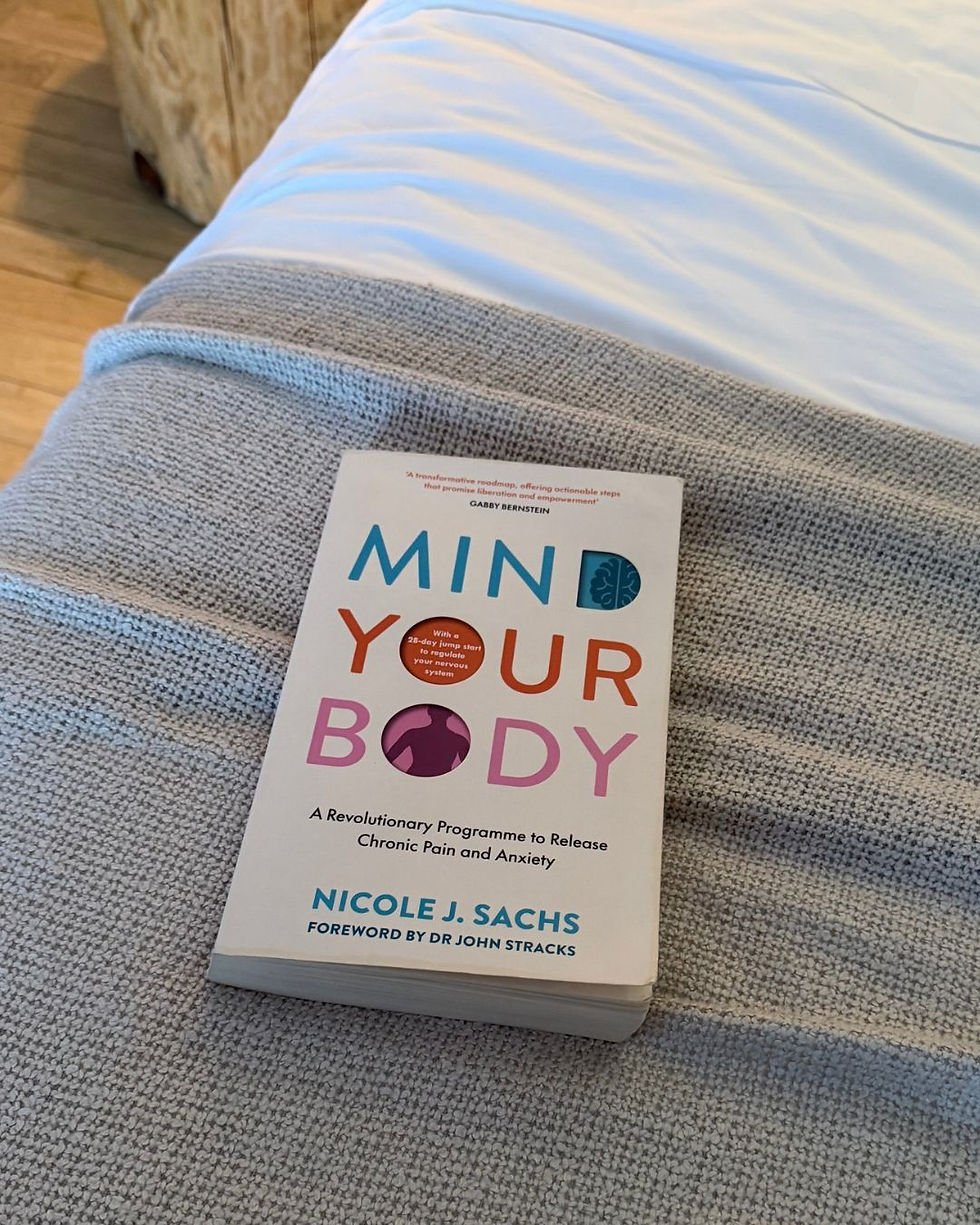
In her book Mind Your Body, psychotherapist Nicole Sachs describes this beautifully when she says that “pain becomes the alarm".
4. Pain is not always a straightforward reflection of structural or tissue damage
As Dr Schubiner explains in his 2026 podcast conversation with Dr Rangan Chatterjee, it is possible to have:
“an injury without pain, and pain without an ongoing injury”.
Similarly, findings such as a disc bulge, hip impingement or arthritic changes do not automatically explain pain. Two people can have remarkably similar scans, yet one may experience severe pain while the other has none.
What appears on the image matters, but so too does how the brain interprets those signals and whether it believes protection is required.
None of this removes the need for good medical care. Structural injury, infection, inflammation and other potentially serious conditions must always be properly assessed. Nor is pain necessarily either structural or neuroplastic; the two can coexist.
5. Unlearning pain
What also became clear was why every clinician, researcher and organisation I encountered placed such importance on understanding the new neuroscience of pain.
Because it was the foundation upon which recovery is built.
That understanding led me to something equally important: if the brain and nervous system can learn pain and other protective responses, neuroplasticity means they also have the capacity to change.
They can learn safety too.
As Dr Schubiner further states in the 2026 podcast with Dr Chatterjee, capturing one of the central principles of modern neuroplastic pain science:
“If those sensations can be learned, they can be unlearned.”
New neural pathways can be strengthened. Old danger responses can become less automatic and, over time, the brain and nervous system can begin responding differently. In other words, for some people living with chronic pain or other persistent symptoms, substantial improvement or recovery may be possible - and, in some cases, symptoms may even be reversed.
For someone who had been told that fibromyalgia was “incurable”, that understanding brought something I hadn't felt for a very long time:
Hope.

Understanding My Story
Before I could begin trying to calm an overprotective brain and nervous system, I needed to become curious about why mine may have become so sensitised in the first place - and what might still be maintaining that protective response today.
That invitation led me somewhere I hadn't expected – my story.
The night my parents separated and my dad left is still vivid in my mind. I was nine. Old enough to understand that adults sometimes split up and emotionally aware beyond my years. But far too young to carry the weight that followed: uncertainty, conflict, ultimatums, financial insecurity and later, a couple of years not seeing my dad at all. My mum did everything she possibly could for my sister and me. Love was always at the centre of our home. But even where there is love, stress can still leave a mark.
I don't share this to blame the past or search for one single cause. There was no solitary experience that “caused” fibromyalgia.
But looking back, I can see how those years influenced me: the constant worry, my need to keep everything together, my belief that I needed to be mature, responsible and “fine”.
Perhaps my nervous system learnt something too: that safety - and life as you know it - can disappear suddenly and without warning.
My childhood, however, was only one chapter in a much longer story.
Health conditions like, anxiety and IBS appeared during my mid-teens. In my twenties I started suffering with pelvic and gynaecological pain. Then came demanding legal training and a career in family law, pregnancy and motherhood, back pain and sciatica, fibromyalgia, a frozen shoulder, severe pelvic congestion syndrome (PCS) and endometriosis, a hysterectomy at forty-two followed shortly by menopause.
Alongside all of that came the countless emotional and practical pressures of adult life.
Pain upon pain.
Stress upon stress.
Responsibility upon responsibility.
And, just for good measure...an early hormonal curveball!
As I gradually joined those dots, I stopped seeing a collection of unrelated diagnoses: one body part after another, endless symptoms, specialists, medications and explanations that never quite connected.
I stopped asking:
“Why do I have so many different things wrong with me?”
And began wondering:
“Could many of them be connected?”
For the first time, my symptoms not only felt more understandable, but more manageable - it was like consolidating lots of separate debts into one loan!
That didn't minimise any diagnosis or deny genuine physical pathology. My endometriosis and pelvic congestion syndrome were very real and, frankly, quite a mess - my gynaecologist, with forty years' experience, said it was one of the worst cases of PCS he'd seen.
Instead, this new understanding allowed me to see structural pathology, biological changes, hormones and nervous-system sensitisation not as competing explanations, but as factors that could all exist together within the same whole-person picture.
Understanding Myself
It wasn’t only about understanding my story. Modern pain science asks us to look beyond childhood and other life experiences, health challenges, relationships and the many stresses we encounter throughout life. It also asks us to take a deeper and more honest look at who we are and the relationship with ourselves: our natural temperament, the ways our personality is shaped over time, and how those traits influence how we think, feel and respond to the world.
I have always been emotionally aware, conscientious and intuitive: the sort of person who notices the atmosphere in a room before the words. I recognised many of the patterns frequently discussed in this field: perfectionism, people-pleasing, emotional responsibility, self-criticism, guilt, hypervigilance, overthinking and fear of getting things wrong.
Outwardly composed.
Inwardly bracing.
If someone I loved was struggling, I instinctively felt responsible for making it better. I planned, organised and anticipated what might happen next. I put enormous pressure on myself to be a good mother, wife, daughter, friend and professional.
These aren't inherently negative qualities. Compassion, conscientiousness and determination have served me incredibly well.
But I began to realise that sometimes the very qualities that help us cope are the same ones that quietly exhaust us.
Nicole Sachs describes our emotional lives as an “emotional reservoir” that gradually fills with stress, unresolved emotions, responsibility and everyday pressures.
I realised mine had probably been overflowing for a very long time.
I learnt that when emotions and stress are continually pushed aside - perhaps because looking after other people, meeting responsibilities or simply getting through the day feels more urgent - they don't necessarily disappear. From a neuroplastic perspective, they may contribute to a nervous system that remains in a protective state, sometimes expressed through genuine physical symptoms that change, fluctuate or evolve over time.
Looking back at my own history of pain, fatigue, IBS, migraine and other symptoms, that possibility began to make enormous sense.
It was here that one of Dr John Sarno's most provocative observations began to resonate:
“There's nothing like a little physical pain to take your mind off your emotional problems.”
This is a point echoed throughout the work of many pain experts: physical symptoms can redirect our attention towards something tangible - the body, appointments, medication and treatment - because emotional burdens can be so much harder to recognise or to face.
For me, recovery therefore wasn't simply about understanding my pain.
It also meant understanding myself.
Putting the Science Into Practice
Once I began understanding why my brain and nervous system might have become so protective, the practical recovery approaches made much more sense.
Somatic Tracking
I started with Somatic Tracking, a technique used within Alan Gordon's Pain Reprocessing Therapy (PRT), which involves observing physical sensations with curiosity rather than fear and gradually teaching my brain that uncomfortable doesn't necessarily mean unsafe.
JournalSpeak
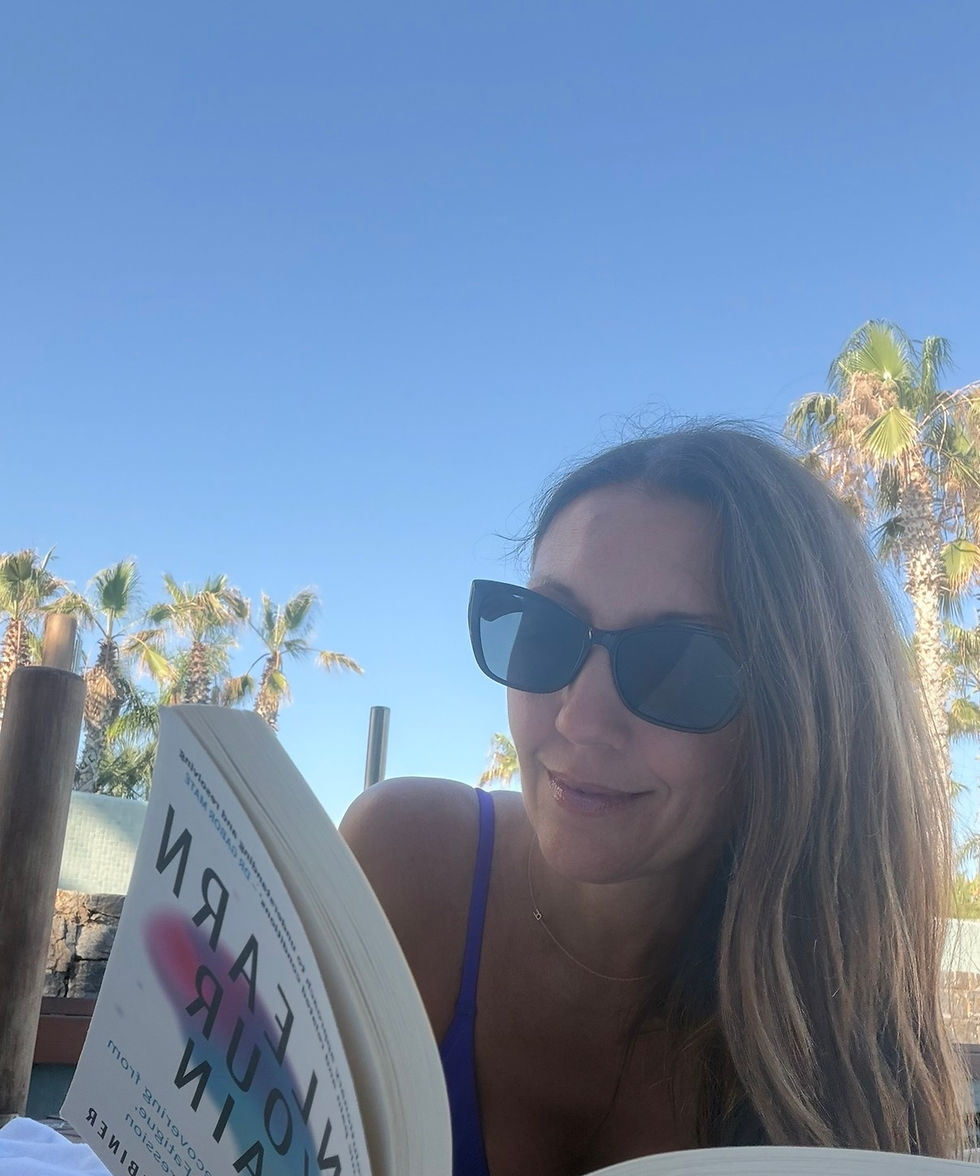
Later, I incorporated JournalSpeak, developed by psychotherapist and author Nicole Sachs, whose work has become fundamental to my recovery. Her book Mind Your Body brings together the science and practical approach in a way I only wish had been available when my symptoms first began.
JournalSpeak uses expressive writing to explore past and present experiences, emotions and behavioural patterns. For anyone who watches Ted Lasso, I think of it as the ‘Roy Kent’ version of journalling - absolutely no filter!
Mindset
I may always be sensitive, conscientious, emotionally attuned and inclined to think several steps ahead. But I can change how tightly I hold those qualities.
As Nicole Sachs says, I can learn to:
“Wear life more loosely.”
For me, that means softening perfectionism, setting clearer boundaries, accepting that rest doesn't need to be earned and recognising that I cannot control everything around me.
Movement
Pilates, walking and strength training remain central to my recovery - rebuilding trust in my body and giving my brain repeated evidence that it is capable, adaptable and safe to move.
There hasn't been one magic technique.
For me, recovery has been an ongoing whole-person process.
Where I Am Now
I am not a neat before-and-after story.
Today, I would describe myself as approximately 80% recovered.
I still experience symptoms and setbacks because recovery is rarely linear. But my life and my relationship with my body are very different.
Over the past eighteen months, with medical support, I have gradually reduced the Tramadol that had been part of my life for so many years, and I hope very soon not to need it at all.
I'm neither anti-medication nor dismissive of the help it gave me. My hope, however, is that with advances in pain science, people will increasingly encounter pain education and evidence-based neuroplastic approaches earlier, so they have the opportunity to explore whether these approaches might help them - and so fewer people find themselves travelling quite the same path I did.
I also think about this in terms of prevention. I think about my children and want them to grow up with this knowledge too, so they understand what their bodies whisper before they ever have to shout like mine.
For me, the neuroplastic approach to recovery has provided something medication never could: an understanding of what may have been driving and perpetuating some of my symptoms, and practical ways of responding differently.
Lessons I will carry with me for life.
This nervous system didn't become sensitised overnight. For me, it most likely happened gradually over decades, so I don't expect it to change overnight either.
But slowly and consistently:
it is working.

Lessons Learnt And Looking Forward
This journey has changed far more than my health. It has changed how I think about pain, healthcare, education and the conversations we have around persistent pain and other neuroplastic symptoms.
Collectively, experts, organisations and advocates are transforming our understanding of chronic pain and helping people understand three profoundly hopeful truths:
The symptoms are real.
Recovery is possible.
And this knowledge deserves a far greater place within healthcare, education and public awareness.
I genuinely believe awareness and conversation can be comforting. Understanding something that has previously felt overwhelming or inexplicable can begin to change our relationship with it.
And perhaps one of the most useful things we can do - even if still a little unsure - is simply to become a little more curious.
Curious about what pain is.
Curious about what has changed in modern pain science.
Curious about what our symptoms may be telling us.
And curious about whether there may be more than one way forward.
Because curiosity is often where wider change begins.
In All the Rage, the documentary exploring the work of Dr John Sarno, he said:
“Knowledge is the only prescription I have.”
At the time, many people struggled to understand exactly what he meant. Decades later, modern neuroplastic pain science has helped explain why knowledge - both of the science and ourselves - can be such a powerful first step towards recovery or symptom reduction.
It doesn't replace the work.
But it makes the work possible.
For years, I believed the answer existed somewhere outside me, waiting to be uncovered through one final diagnosis, prescription or treatment.
What I eventually discovered was something far more hopeful.
As the foreword to Dr Howard Schubiner's Unlearn Your Pain so beautifully says:
“The power has always been within us.”
Because when it comes to neuroplastic pain and other persistent symptoms, we may have far more agency over our own recovery - and the ability to help change our own narratives - than many of us have ever understood, or have ever been given reason to believe.
References
Dr Howard Schubiner & Dr Rangan Chatterjee, Feel Better, Live More (podcast), Episode #310 (2022), How To Heal Chronic Pain with Dr Howard Schubiner - including “Pain is a protector.”
Nicole Sachs, LCSW, Mind Your Body (2025); JournalSpeak; and The Cure for Chronic Pain podcast - including “pain becomes the alarm” and the concept of the “emotional reservoir.”
Dr Howard Schubiner & Dr Rangan Chatterjee, Feel Better, Live More (podcast), Episode #662 (2026) - The Revolutionary Science of Recovering from Chronic Pain, Fatigue, Anxiety & Depression with Dr Howard Schubiner - including “If those sensations can be learned, they can be unlearned.”
Dr John Sarno, The Mindbody Prescription: Healing the Body, Healing the Pain (1998) and The Divided Mind: The Epidemic of Mindbody Disorders (2006).
Alan Gordon, LCSW, Pain Reprocessing Therapy (PRT) and Somatic Tracking; The Way Out (2021), co-authored with Alon Ziv.
SIRPA - Stress Illness Recovery Practitioners Association - Resources and education relating to mind-body/neuroplastic approaches to chronic pain and persistent symptoms.
All the Rage: Saved by Sarno, Documentary exploring the work of Dr John Sarno (2016) - including “Knowledge is the only prescription I have.”
Dr Howard Schubiner, Unlearn Your Pain (2026) - including the foreword quotation “The power has always been within us.”


